


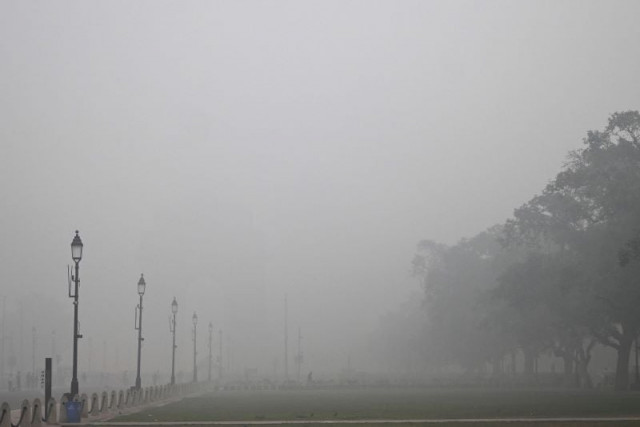
Lahore Air Pollution Worsens as Pre-Smog Season Raises Health Concerns
Lahore’s air quality has started showing signs of further deterioration as Punjab enters the early phase of the smog season, with pollution levels repeatedly reaching unhealthy levels across the provincial capital.
According to real-time monitoring data from the Punjab Environmental Protection Agency (EPA), Lahore recorded an overall Air Quality Index (AQI) of 154 at noon on Sunday. The level falls into the category considered unhealthy for sensitive groups.
The reading was slightly lower than the AQI of 172 recorded at the same time a day earlier. However, pollution remained elevated in several parts of the city.
Safari Park recorded an AQI of 180, while Shahdara stood at 171 and Multan Road at 164. Barki Road recorded 160, followed by Punjab University at 152 and GT Road at 151. DHA Phase 6 had an AQI of 149, while Kahna Nau, Wagha Border and Egerton Road recorded 145, 140 and 133, respectively.
EPA monitoring data also showed that Lahore’s AQI reached 295 at 9am on October 3. Pollution levels crossed 200 several times between October 1 and 3, indicating that unhealthy air conditions have already emerged ahead of the colder winter months.
Air quality concerns are also being reported in other cities across Punjab, where monitoring has recorded unhealthy and very unhealthy conditions.
International air quality rankings have also shown significant changes in Lahore’s position during recent days. IQAir ranked Lahore among the world’s most polluted major cities at different times, although readings can vary considerably between monitoring systems and locations.
Experts have warned that air quality could deteriorate further as temperatures fall. Dr Munawar Sabir, former chairman of the Punjab University Geography Department, said October marks the beginning of a period when atmospheric conditions can make pollution more difficult to disperse.
Lower temperatures, weaker winds and atmospheric inversion can keep pollutants closer to ground level. Vehicle emissions, industrial activity, brick kilns, construction dust, waste burning and agricultural residue burning can further contribute to poor air quality.
IQAir has also identified dust, traffic emissions, industrial activity, construction and brick kilns among the major contributors to Lahore’s pollution. During winter, fog, humidity and stagnant weather can make the situation more challenging.
Punjab authorities have already launched a pre-smog enforcement campaign targeting crop residue burning, waste burning, vehicle emissions, construction dust and emissions from brick kilns.
The EPA has instructed relevant departments to reduce activities that generate dust, including dry sweeping. Authorities have also introduced digital monitoring, drone surveillance and field enforcement to identify pollution sources and take action against violations.
Officials said environmental authorities have imposed more than Rs300 million in fines during the current year, while enforcement against the burning of agricultural residue has also been increased.
Night teams and drones are being used to monitor suspected cases of stubble burning, particularly in areas along major motorways. The monitoring system combines aerial surveillance with ground teams to improve enforcement.
The Punjab government is also working to expand its air quality monitoring network. Plans include 26 additional monitoring stations, 20 smoke opacity meters for checking vehicle emissions and mobile laboratories for fuel testing.
If pollution levels increase significantly in the coming weeks, authorities could consider measures such as limiting outdoor activities in schools and adjusting business timings.
Children, elderly people and individuals with respiratory or cardiovascular problems are considered more vulnerable when air pollution reaches unhealthy levels.
With pollution already showing repeated spikes, Punjab appears to have entered the early deterioration phase ahead of the main winter smog period.
