


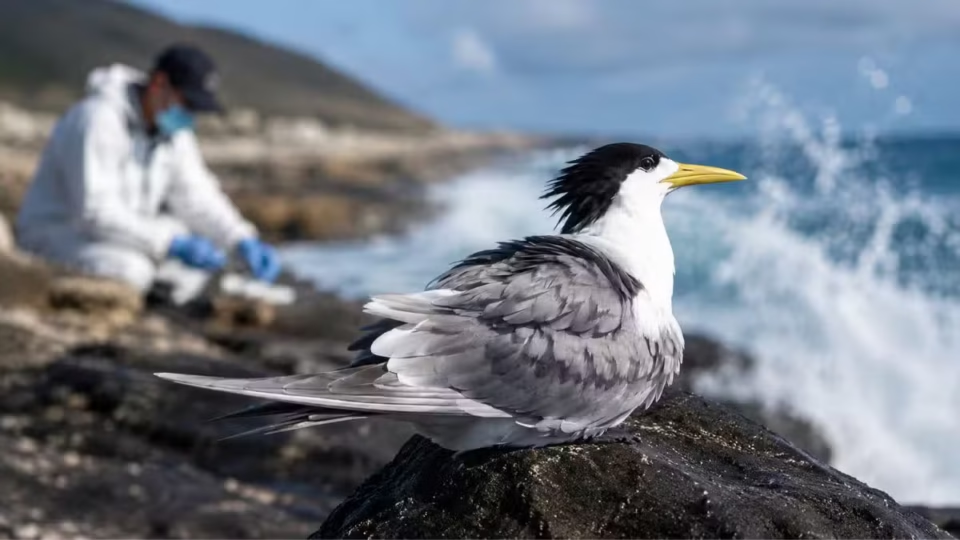
Australia Confirms First H5N1 Bird Flu Case in Native Seabird
Australia has confirmed its first case of H5N1 avian influenza (bird flu) in a native seabird, marking another development as authorities continue monitoring the spread of the virus across the country.
According to Australian officials, laboratory testing confirmed the presence of the H5N1 virus in a greater crested tern found in the coastal town of Robe in South Australia.
First Confirmed Case in a Native Seabird
Australian Agriculture Minister Julie Collins said this is the first confirmed H5N1 case involving a native Australian seabird. Previous detections had been limited to migratory seabirds.
The minister described the finding as a matter of concern but noted that health authorities had anticipated the possibility as surveillance efforts continued.
No Evidence of Wider Spread
Officials said there is currently no evidence of widespread bird deaths or transmission of the virus to commercial poultry or the broader agricultural sector.
Authorities are continuing investigations to determine how the infected bird contracted the virus. Early assessments suggest it may have come into contact with migratory seabirds that had previously tested positive for H5 viruses.
Total Confirmed Cases Increase
With the latest detection, Australia has now recorded 12 confirmed H5N1 cases, including additional recent detections in South Australia and Western Australia.
Australia reported its first mainland H5N1 case in June 2026. Before that, the virus had been detected in late 2025 on Heard Island, a remote Australian sub-Antarctic territory located far from the mainland.
Authorities continue to monitor the situation closely while maintaining surveillance measures to protect wildlife, poultry, and the agricultural sector.
