


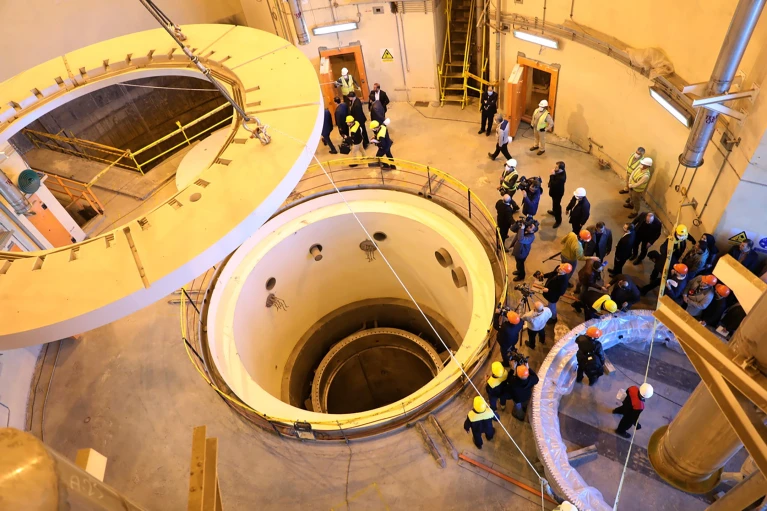
Iran’s Nuclear Program and Uranium Enrichment Explained Amid Global Scrutiny


Iran’s nuclear program has come under renewed international attention following recent military actions and ongoing concerns over nuclear development in the region.
According to reports, the United States and Israel have targeted several Iranian nuclear-related sites in past operations, increasing global focus on Iran’s nuclear activities and stockpile of enriched uranium.
Iran’s Position on Nuclear Program
Iran has consistently stated that its nuclear program is intended for peaceful purposes, including energy production and scientific research.
However, international monitoring agencies have raised concerns in the past about the level of uranium enrichment and its potential proximity to weapons-grade material.
What is Uranium Enrichment?
Uranium is a naturally occurring element found in different forms, known as isotopes. The most important isotopes are:
- U-238 (most common and stable form)
- U-235 (used for nuclear reactions)
U-235 is capable of sustaining nuclear reactions, which makes it essential for both nuclear energy production and, in certain contexts, weapon development.
How the Process Works
Uranium enrichment is the process of increasing the concentration of U-235 by separating it from U-238.
This is typically done using specialized industrial equipment called centrifuges, which spin uranium gas at very high speeds to separate the isotopes based on weight.
Why It Matters
Enriched uranium can be used for:
- Nuclear power generation
- Scientific and medical research
- In some cases, the development of nuclear weapons (if highly enriched)
Because of this dual-use nature, uranium enrichment is closely monitored by international bodies such as the International Atomic Energy Agency (IAEA).
