


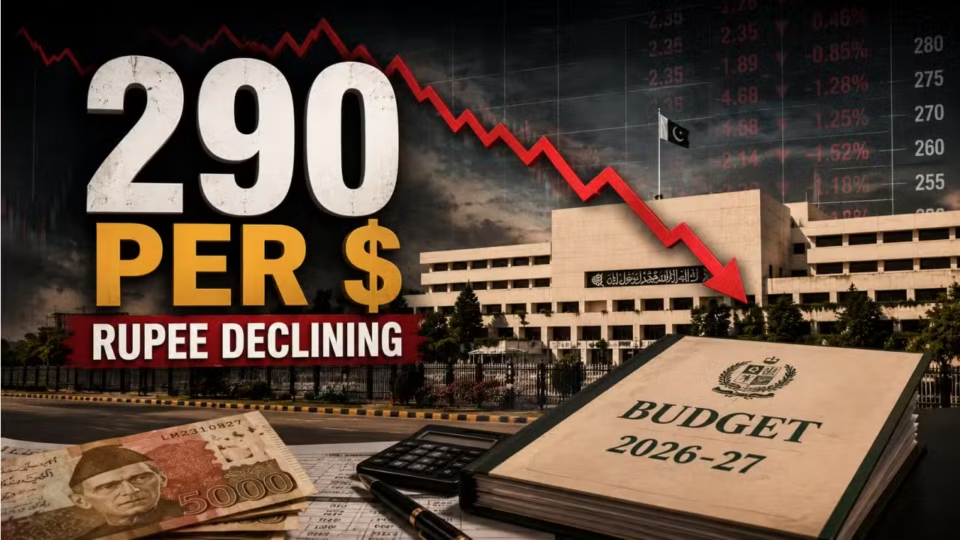
Government Sets Rs. 290 Per Dollar Benchmark for FY2026-27 Budget Planning
The federal government has adopted an exchange rate assumption of Rs. 290 per US dollar for budget planning and financial projections for the fiscal year 2026-27.
According to official directives issued by the Finance Ministry, all ministries and government divisions have been instructed to use the benchmark rate when preparing budget estimates, foreign-funded project calculations, loan projections, and development expenditure plans for the upcoming fiscal year.
The planning rate is intended for budgeting purposes and does not represent an official exchange rate forecast. It serves as a standard benchmark to help government departments prepare financial estimates and manage external financing calculations.
The assumed exchange rate is slightly higher than the benchmark used for revised estimates in the current fiscal year. This approach reflects the government’s efforts to account for potential fluctuations in international financial markets and exchange rate movements during the budget period.
At present, the Pakistani rupee has remained relatively stable in the interbank market, trading near Rs. 278.42 against the US dollar.
Government planning documents indicate that federal and provincial authorities are expected to secure approximately $3.2 billion in foreign-funded development financing during FY2026-27. These funds are expected to support infrastructure, public service, and development projects across the country.
Pakistan’s development spending plans for the next fiscal year are estimated at around Rs. 4.3 trillion, with external financing continuing to play an important role in supporting key projects.
The country’s current account deficit target for FY2026-27 is projected at approximately 0.7 percent of GDP, reflecting efforts to maintain external sector stability while supporting economic growth.
Officials have stated that Pakistan’s external financing requirements and debt obligations remain under review, with the government continuing to focus on prudent fiscal management and sustainable financing strategies.
Economic analysts note that budgetary exchange-rate assumptions are a common practice used by governments worldwide to facilitate planning and financial forecasting for the upcoming fiscal year.
