


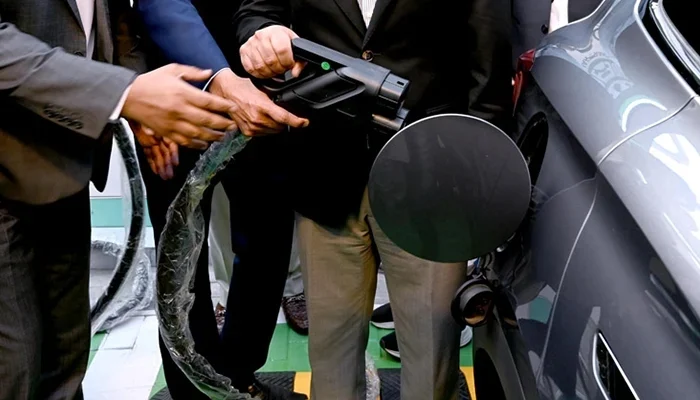
Islamabad’s Shift to Electric Vehicles Faces Affordability and Charging Challenges
ISLAMABAD: Pakistan’s push toward electric mobility is gaining momentum under the National Electric Vehicle (NEV) Policy 2025–30, but affordability and charging infrastructure remain key challenges for many drivers in Islamabad.
The government’s policy aims to reduce fuel imports, lower emissions, and encourage the adoption of electric vehicles (EVs). However, for commercial drivers who depend on their vehicles for daily income, the higher upfront cost of EVs continues to be a major concern.
Rising Fuel Costs Increase Interest in EVs
Commercial drivers, including taxi operators and ride-hailing partners, spend a significant portion of their earnings on fuel.
As petrol prices fluctuate, many drivers say fuel has become one of their largest operating expenses, making it increasingly difficult to maintain a stable income.
While electric vehicles promise lower running costs, many drivers remain hesitant because of the higher purchase price and concerns about charging facilities.
Government Promoting Electric Mobility
The National Electric Vehicle Policy 2025–30 includes incentives aimed at encouraging EV adoption, expanding charging infrastructure, promoting local manufacturing, and increasing the share of electric vehicles on Pakistan’s roads.
Islamabad has become one of the first cities to begin implementing these initiatives. The Capital Development Authority (CDA) has started expanding charging facilities, while electric buses are already operating on several routes in the capital.
Experts believe Islamabad’s planned road network and relatively shorter travel distances make it well suited for electric transportation.
Lower Running Costs Could Benefit Commercial Drivers
According to Ahtasam Ahmad, Energy Finance and Climate Tech Lead at Renewables First, electric vehicles can offer long-term financial savings, particularly for drivers who travel long distances every day.
He explained that although electric motorcycles typically cost 50% to 80% more than conventional petrol bikes, their operating expenses are much lower.
Estimated operating costs are around Rs. 1.5 to Rs. 2 per kilometre for an electric motorcycle, compared with approximately Rs. 6 per kilometre for a petrol-powered bike.
For commercial riders, these savings could amount to Rs. 5,000 to Rs. 8,000 per month, depending on daily travel distance.
Charging and Battery Concerns Remain
Despite the potential savings, many drivers remain cautious about switching to electric vehicles.
Common concerns include:
- Availability of charging stations
- Battery life and replacement costs
- Charging time
- Vehicle financing options
- Maintenance and repair services
Industry experts note that many electric motorcycles currently use batteries that require further technological improvements, while specialized maintenance services are still developing across Pakistan.
Expanding Charging Infrastructure Is Essential
Energy experts say Pakistan’s electricity generation capacity can support increased EV adoption in the near term. However, they emphasize that expanding charging infrastructure will be critical for long-term success.
According to Abdur Rehman, Manager of Power Markets, Pakistan needs a broader network of:
- Home charging facilities
- Workplace charging stations
- Public fast-charging points
He also highlighted the importance of coordinated planning between the government, regulators, and electricity distribution companies to introduce smart charging systems and time-of-use electricity tariffs.
A Long-Term Transition
Experts believe electric vehicles have the potential to reduce transportation costs, improve energy efficiency, and lower emissions in Pakistan.
However, achieving widespread adoption will require continued investment in charging infrastructure, affordable financing, consumer awareness, and reliable after-sales support.
As Pakistan continues implementing its National Electric Vehicle Policy, addressing these practical challenges will play a key role in determining how quickly consumers transition to electric mobility.
