


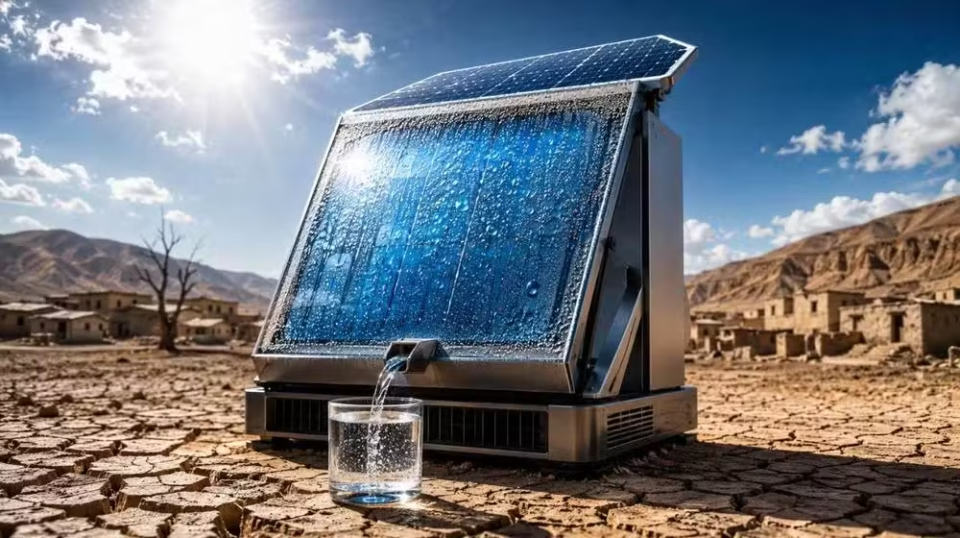
Solar-Powered Hydrogel Produces Clean Drinking Water From Air, Even in Desert Conditions
Researchers from Stanford University and MIT have developed a new solar-powered hydrogel system that can extract moisture from the air and convert it into clean drinking water, even in extremely dry environments.
The innovation could provide a potential solution for water-scarce regions where access to safe drinking water remains limited.
Addressing Global Water Challenges
According to international health data cited by researchers, billions of people worldwide still lack access to safely managed drinking water. This has increased interest in new technologies that can generate water from atmospheric humidity.
The new hydrogel system is designed to help bridge this gap by using renewable solar energy to produce water in off-grid and arid regions.
How the Technology Works
The material is a sponge-like hydrogel made from lithium chloride and polyacrylamide.
- Lithium chloride absorbs moisture from the air
- Polyacrylamide helps retain and stabilize the structure
The hydrogel absorbs water vapor during cooler conditions. When exposed to sunlight, it heats up and releases the stored moisture as vapor, which is then collected and condensed into liquid drinking water.
Improvements in Durability
Earlier versions of the material faced durability issues and broke down after repeated use cycles. Researchers later discovered that metal components in the system were causing chemical reactions that damaged the hydrogel.
To solve this, a protective anti-corrosion coating was added to the metal surface. This prevented harmful reactions and significantly improved the lifespan of the system.
Longer Lifespan and Better Performance
With the improved design, the hydrogel has shown stable performance over extended testing periods and hundreds of water collection cycles.
Researchers reported that the system can now operate reliably for months without significant degradation.
Water Production and Future Potential
Current prototypes are capable of producing around two liters of water per day from a panel roughly the size of a towel under suitable conditions.
Scientists believe future improvements could increase output further, making the technology more practical for rural and desert communities.
Potential Low-Cost Water Source
Early estimates suggest that the cost of producing water using this method could drop to very low levels if scaled successfully, making it far more affordable compared to bottled water and potentially competitive with traditional water supplies in some regions.
Not Yet Ready for Mass Use
While the results are promising, researchers emphasize that the technology is still in development and not yet ready for large-scale deployment.
Work is ongoing to improve efficiency, increase output, and reduce costs so it can eventually be used in real-world water-scarce environments.
The study highlights growing interest in atmospheric water harvesting technologies as a potential future solution to global water shortages.
