


Rescue Mission Launched to Save NASA’s Swift Space Telescope From Falling Back to Earth


CAPE CANAVERAL: A new space rescue mission is underway to help extend the life of one of NASA’s important space telescopes before it loses too much altitude and re-enters Earth’s atmosphere.
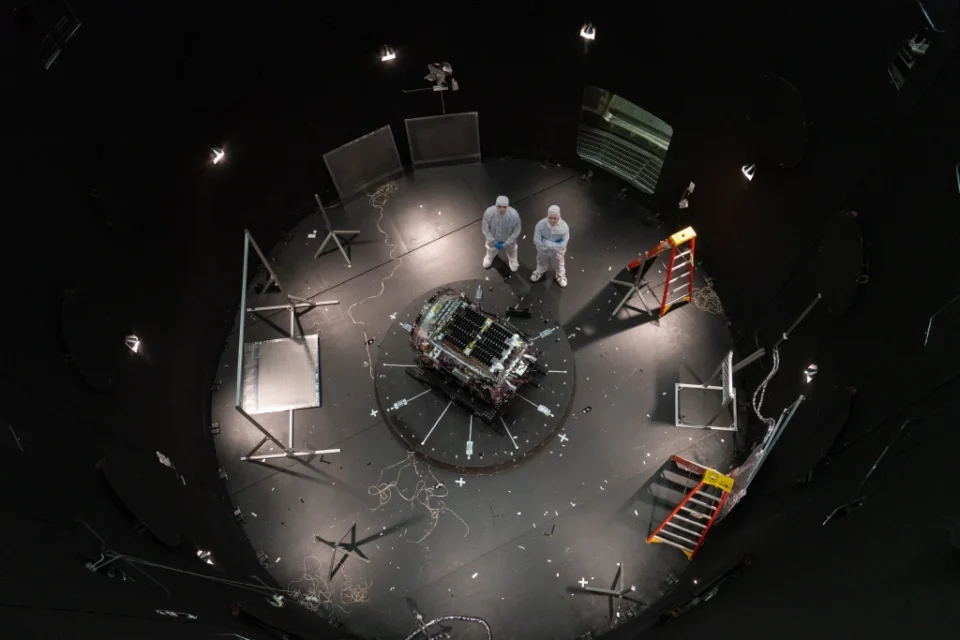
On Friday, aerospace company Katalyst Space Technologies, with support from Northrop Grumman, successfully launched the LINK spacecraft aboard a Pegasus rocket. The rocket was released from a modified aircraft over the Pacific Ocean near the Marshall Islands, beginning a mission to reach NASA’s Swift Observatory in about a month.
Mission to Extend Swift’s Lifespan
Launched in 2004, NASA’s Swift Observatory has spent more than two decades studying some of the universe’s most energetic events, including gamma-ray bursts, exploding stars, and other powerful cosmic phenomena.
However, increased solar activity and recent solar storms have caused Earth’s upper atmosphere to expand, creating greater atmospheric drag. As a result, Swift has been gradually losing altitude faster than expected.
To help preserve the observatory, NASA has awarded approximately $30 million for the rescue mission, which aims to safely capture the telescope and move it into a higher orbit.
Gentle Orbit Boost Planned
The LINK spacecraft is equipped with three robotic arms designed to carefully connect with Swift. Once attached, its thrusters will slowly raise the telescope’s orbit by approximately 150 miles (240 kilometers).
Swift is currently orbiting Earth at an altitude of about 224 miles (360 kilometers). Restoring it to a higher orbit is expected to significantly extend its operational life without placing excessive stress on the spacecraft.
If the mission proceeds successfully, scientists expect Swift to resume scientific observations as early as September.
Protecting Valuable Space Missions
NASA temporarily paused Swift’s observations to conserve its remaining orbital altitude until the rescue mission could begin.
The mission also serves as an important demonstration of future satellite servicing technology. Similar techniques could eventually be used to extend the operational life of other aging spacecraft, including the iconic Hubble Space Telescope, which is also slowly losing altitude due to increased atmospheric drag.
Successful completion of the mission could mark another major step toward maintaining valuable scientific satellites in orbit for longer periods while reducing the need for costly replacements.
