


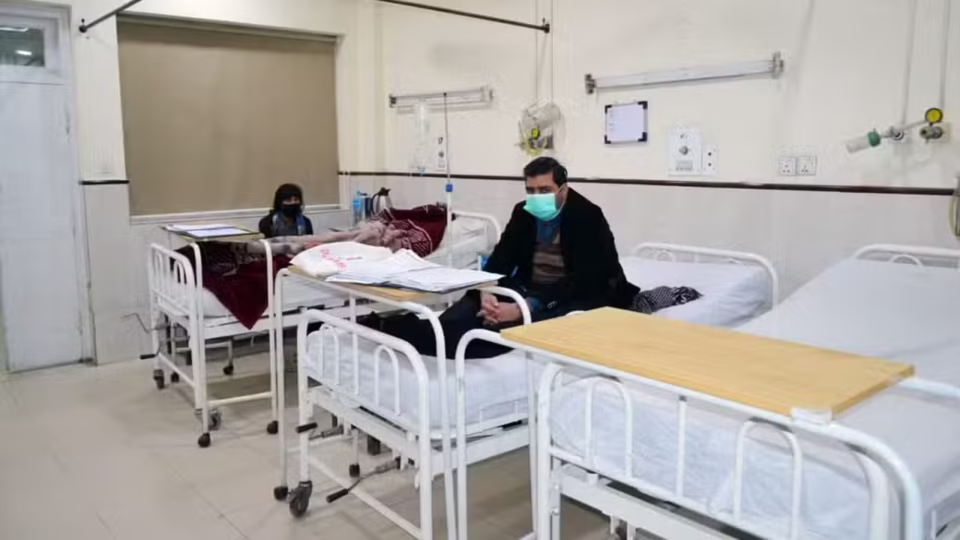
KP Hospitals Face Shortage of ICU Beds in Public Sector Facilities
Khyber Pakhtunkhwa (KP) is currently facing a significant shortage of intensive care unit (ICU) beds in public hospitals, raising concerns about the availability of critical healthcare services for patients in need of emergency treatment.
According to available figures, the province has around 400 ICU beds in public-sector hospitals for a population of more than 40 million people, highlighting a major gap between demand and capacity.
The issue gained attention following a reported incident at Khyber Teaching Hospital, where a critically ill patient could not be accommodated due to the unavailability of an ICU bed. The patient’s family stated that they were informed by hospital staff that no ICU space was currently available.
Official data shows limited ICU capacity across major hospitals in the province. Hayatabad Medical Complex has 49 ICU beds, Khyber Teaching Hospital has 45, and Lady Reading Hospital—the largest tertiary-care hospital in the province—has 34 ICU beds. Other facilities, including Ayub Teaching Hospital in Abbottabad and Mardan Medical Complex, also operate with limited intensive care capacity.
Healthcare professionals have described the shortage as a serious challenge for the provincial health system, noting that existing resources are insufficient to meet growing patient needs.
Experts have also pointed out additional challenges, including a shortage of trained critical care staff and limited specialized equipment, which further impacts the expansion of ICU services. They have recommended increased investment in healthcare infrastructure, training programs, and resource allocation to improve critical care services.
The KP Health Department has acknowledged the shortage and stated that efforts are underway to improve healthcare facilities across the province.
Officials said that increasing ICU capacity is part of the government’s healthcare priorities, with plans under consideration to expand critical care services and enhance hospital infrastructure in the upcoming fiscal period.
