


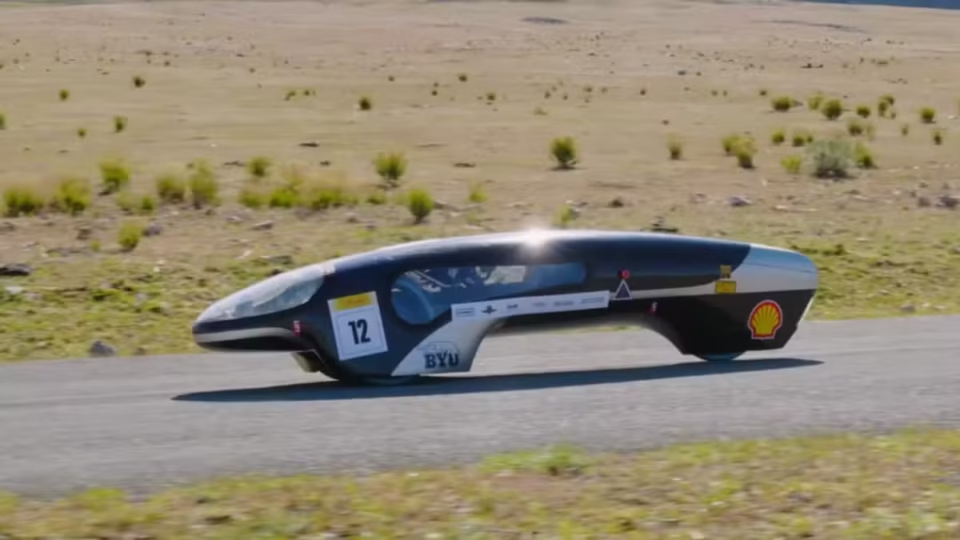
Students Develop Ultra-Efficient Experimental Car Capable of Exceptional Fuel Mileage
A group of engineering students in Utah, United States, has developed an experimental vehicle that can travel an estimated 900+ kilometers using just one liter of fuel.
The project, named Supermileage, was created by students at Brigham Young University as part of the Shell Eco-Marathon, an international competition focused on designing vehicles with maximum fuel efficiency and minimal energy consumption.
Designed for Efficiency, Not Everyday Use
The vehicle is built entirely with efficiency in mind. It features a lightweight carbon-fiber body and weighs only around 49 kilograms. The design also includes a very small fuel tank of approximately 30 milliliters and a single-seat layout intended for a small, lightweight driver.
According to the team, the vehicle prioritizes energy conservation over comfort, speed, or practicality.
Performance and Limitations
Although the car demonstrates remarkable fuel efficiency in controlled conditions, it is not designed for regular road use.
Its top speed is around 37 kilometers per hour, and it can travel roughly 32 kilometers before needing refueling. Due to its compact design and limited features, it is strictly an experimental prototype rather than a commercial or consumer vehicle.
Focus on Innovation in Fuel Efficiency
The students behind the project say the goal is to explore how far fuel efficiency can be improved when traditional design constraints are removed.
While electric vehicles are increasingly seen as a sustainable transportation solution, projects like Supermileage highlight how innovation in engineering can also push the boundaries of internal combustion efficiency in controlled environments.
Experts note that such prototypes are primarily intended for research and educational purposes, helping students understand aerodynamics, weight reduction, and energy optimization.
