


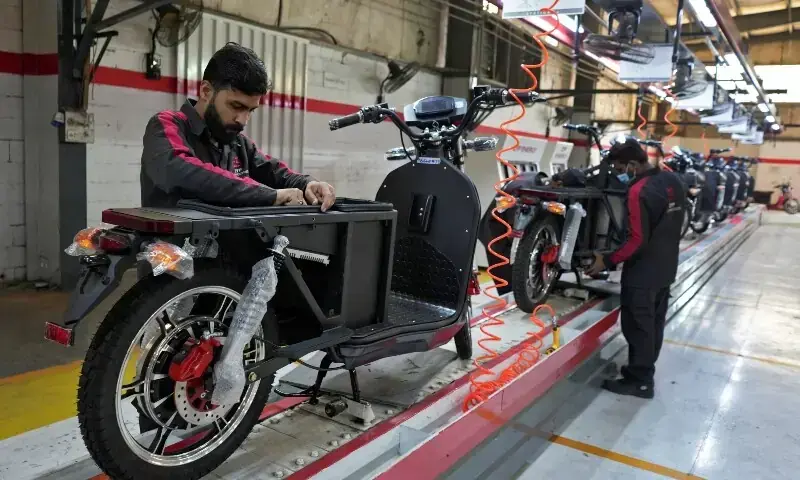
National Assembly Panel Highlights Challenges Facing E-Bike Adoption in Pakistan
ISLAMABAD: A sub-committee of the National Assembly Standing Committee on Industries has identified several challenges slowing the adoption of electric motorcycles in Pakistan, including the absence of a dedicated regulatory authority and the lack of a comprehensive lithium battery policy.
During a committee meeting held on Monday, convener Dr Mehreen Bhutto expressed concern over the fragmented regulatory framework governing the e-motorcycle sector. She noted that multiple ministries and departments currently oversee different aspects of the industry, creating coordination and enforcement challenges.
Officials informed the committee that manufacturing licences for electric motorcycles are issued by the Engineering Development Board (EDB) under the Ministry of Industries and Production. Quality standards for electric motorcycles and batteries are certified by the Pakistan Standards and Quality Control Authority (PSQCA), while the development of charging infrastructure falls under the National Energy Efficiency and Conservation Authority (NEECA) within the Ministry of Energy.
The committee was also informed that most lithium-ion batteries used in Pakistan are imported. Officials noted that used lithium-ion batteries sometimes enter the country as scrap, with import-related matters handled by Customs authorities and the Ministry of Commerce. Roadworthiness and vehicle operation are regulated by provincial governments.
Dr Mehreen Bhutto raised concerns about battery quality, stating that some manufacturers reportedly use lower-quality batteries that may require replacement within two to three years. She also noted that replacement battery costs can be significant for consumers.
Industry Raises Concerns Over Battery Standards
Representing electric motorcycle manufacturers, Dr Muhammad Amjad said that existing manufacturing licences do not specifically require the use of lithium-ion batteries. As a result, some manufacturers continue to use lead-acid batteries, which are generally less expensive.
He also stated that high import duties on lithium-ion batteries have contributed to the growth of an informal market, where refurbished battery cells are reportedly sold without proper registration or certification.
Another industry representative, Shahid Bajwa, highlighted the lack of policies to encourage local manufacturing of electric motorcycle components. He also questioned whether there is a formal mechanism for reporting illegal battery manufacturers to the relevant authorities.
Calls for Stronger Safety Standards
Participants at the meeting agreed that the PSQCA should strengthen its technical capabilities and establish specialised laboratories to test lithium batteries and related components.
Dr Mehreen Bhutto asked industry stakeholders to submit recommendations to the committee, emphasising that electric motorcycles require strict safety standards due to the unique risks associated with battery systems and electrical components.
Meanwhile, EDB Chief Executive Officer Hammad Mansoor informed lawmakers that a new battery policy is currently being finalised. He said the upcoming policy is expected to address many of the concerns raised during the meeting, including safety standards, quality regulation, and broader industry development.
The committee is expected to continue consultations with stakeholders as Pakistan works to expand the adoption of electric vehicles and strengthen the country’s e-mobility framework.
